Home · Costs & Insurance
What water damage work costs in Gastonia, and how insurance pays
How much does water damage restoration cost in Gastonia, and does insurance cover it?
Published national guides put professional water cleanup and drying commonly in the low thousands for a contained loss, with the scope deciding the figure: how many rooms, how much material comes out, and whether the crawl space floor system is involved. Gastonia adds one honest variable, the clay: ground that stays wet slows drying and can add equipment days. Insurance commonly covers sudden plumbing failures and does not cover creek flooding without a flood policy, and the line between the two is the documented source. The itemized written scope is the number that matters.
Honest numbers first. Published national guides put a contained cleanup and drying job commonly in the low thousands, with multi-room losses, tear-out, and crawl space floor-system work priced above that by the written scope. In Gastonia the deciding questions are the source, the number of wet assemblies, and how long the clay under the house keeps feeding moisture upward. Nobody honest quotes a firm total by phone; the number is built from a moisture map and an itemized scope, in that order.
Compiled from published national guides and local data; reviewed by the Crowders Creek Restoration research team. Last reviewed November 16, 2026.
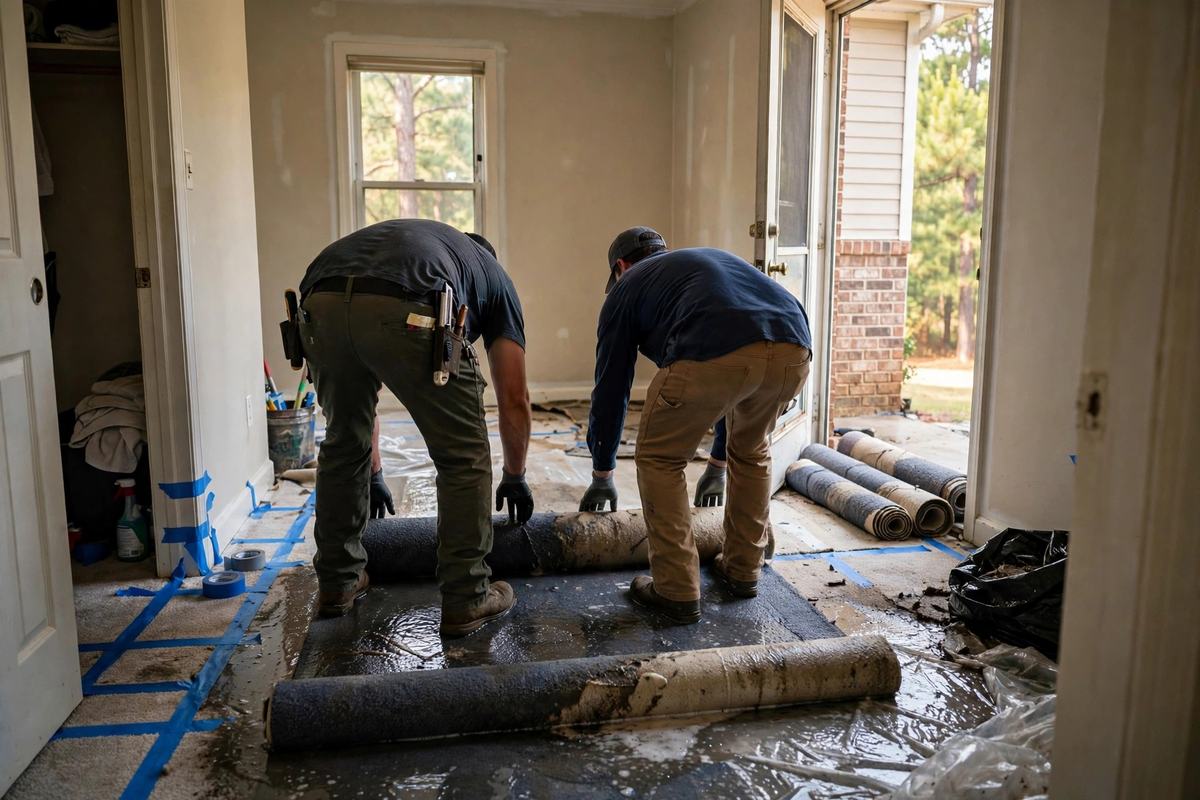
Typical cost ranges
| Job | Typical range | What moves it |
|---|---|---|
| Emergency extraction and drying setup | Low thousands for a contained loss | The band most single-source losses start in, per published national guides. |
| Crawl space cleanup and floor-system drying | Priced by the scope | Insulation verdict, joist readings, and vapor barrier questions decide the figure. |
| Tear-out and rebuild of wet drywall and flooring | Priced by the room | Quoted separately from drying, line by line, after final moisture readings. |
| Sewage or creek-water cleanup | Priced by the scope | Containment and porous-material removal are the cost drivers in category three losses. |
Ranges are published guide figures, not a quote for your home. Your scope is written after a moisture survey and should name the source it assumes.
How insurance pays for this work
The deductible question
Standard deductibles commonly run $500 to $2,500. A sudden burst line is usually worth the claim conversation; a slow leak found late may fall under the deductible once the timeline is read. Flood water from creeks is handled under flood policies, not homeowners policies, which is why the source documentation matters from the first hour.
Request a callback
Prefer to talk later? Leave your details and an independent local pro will call you back. No charge to you, no obligation.
Crowders Creek Restoration is a free referral service. Submitting this form connects you with independent local contractors who provide the work.